The flipper
Buy distressed homes, push the board to fix what's broken, and sell into the recovery.
In development · Coming to iOS and Android
Common Grounds is a persistent multiplayer property tycoon where every neighborhood is run by its players. You build it, your neighbors vote on it, and everyone lives with what you decided together.
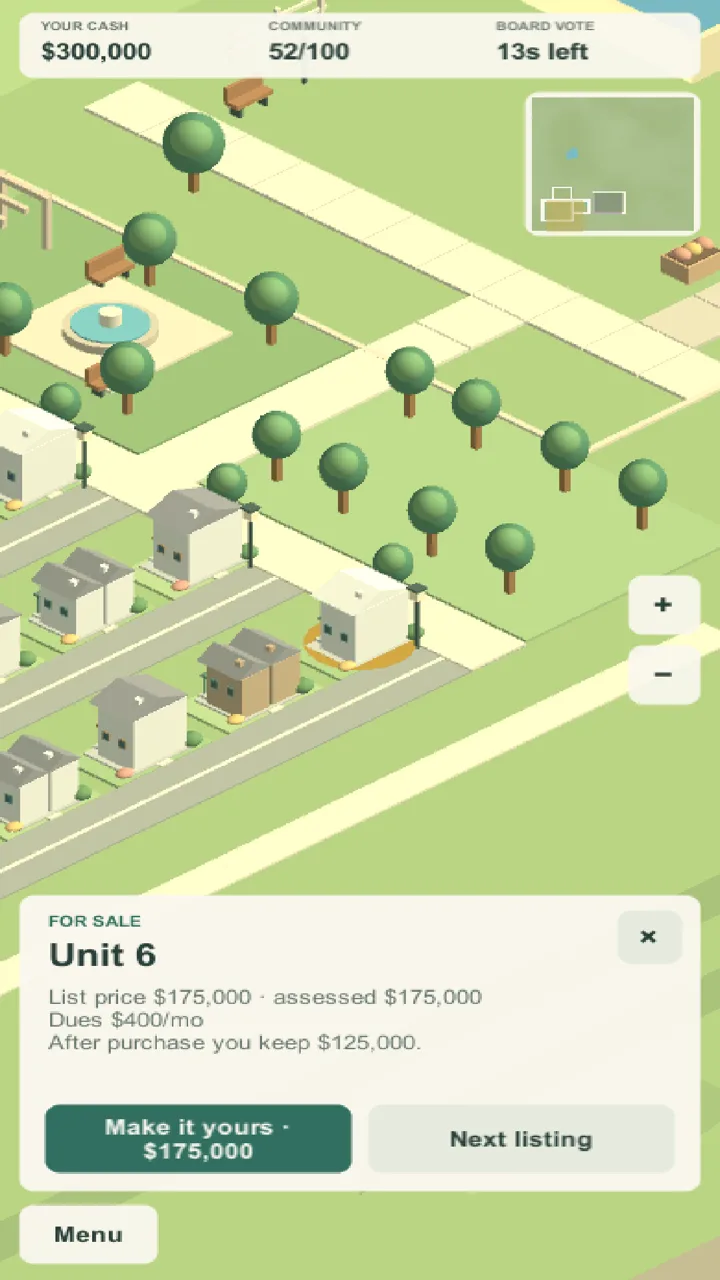
Work-in-progress capture from the Unity editor, October 2026. Not final art; the cash and prices shown are test values.
How it plays
Every project runs through the same five-step loop. There’s no reloading a save: when things go wrong, you recover, sell, or write it off, and the next project is bigger for it.
Pick up a parcel, lay out streets and lots, choose the homes, the quality tier and the amenities, and decide how the community will be governed.
Your neighborhood opens its doors. Residents move in, the association takes over, and the place starts running on the rules you set.
Set the monthly dues, fund the reserves, hire vendors, and ride out hurricanes, insurance spikes, feuds and failing pool pumps.
Good calls lift property values. Bad ones show up as falling prices, unpaid dues and, eventually, a neighbor organizing to take over.
Profits from sales, management fees and appreciation fund your next project. Bigger, riskier, and with more people watching.
Six ways to play
Everyone starts as a homeowner. What you become is up to you, and one account can be a developer, a board member, a vendor and an investor at the same time.
Buy distressed homes, push the board to fix what's broken, and sell into the recovery.
Turn raw land into a brand-new community, sell the units, and move on to the next site.
Run a landscaping, pool or security company and win contracts across many neighborhoods.
Win board seats, build a coalition, and shape how a community spends its money.
Take on management contracts for other players' communities and earn a monthly fee for keeping them healthy.
Spread holdings across communities, regions and quality tiers, and let the market do the rest.
The world
Common Grounds takes place in persistent shared worlds: a city and its suburbs that keep running whether you’re online or not. When another player opens a new development, everyone in that world sees it appear.
The players meet at the moments that matter, like board meetings, elections and budget votes, instead of needing to be online at the same time. Showing up counts. Missing a vote has consequences.
We’re also building a solo builder mode for designing a neighborhood at your own pace, with plans to bring finished designs into the shared world as blueprints.
A city and its suburbs. Each world is designed to hold up to around a thousand players on one map. When it gets crowded, a fresh world opens, so newcomers always have room to start.
A neighborhood of 30 to 200 homes. Most homes belong to computer-controlled residents with their own personalities; the players are the ones who shake things up.
A single home. Its value rises and falls with how well the whole community is run, and that includes you.
What makes it different
Most builders end when construction does. Here, opening day is when the real game begins: the dues, the repairs, the votes and the people.
The board members, developers, vendors and managers around you are other people. Their decisions move your property values, and yours move theirs.
Your neighbors are a cast of personalities, from frugal retirees to rule-loving busybodies, who complain, vote in blocs, and remember what you did.
When a value, a score or a satisfaction rating moves, the game tells you why, so a bad month is something you can learn from and recover from.
Takeovers need a real grievance and a supermajority, not a bigger wallet. If we ever sell anything, it will change how you look, never how powerful you are.
The world keeps going while you're away, and the big moments happen at scheduled board meetings and votes. Coming back should bring opportunities, not chores.
From the workbench
These are real captures from the current development build, running in the Unity editor. The art is a first pass and will change.
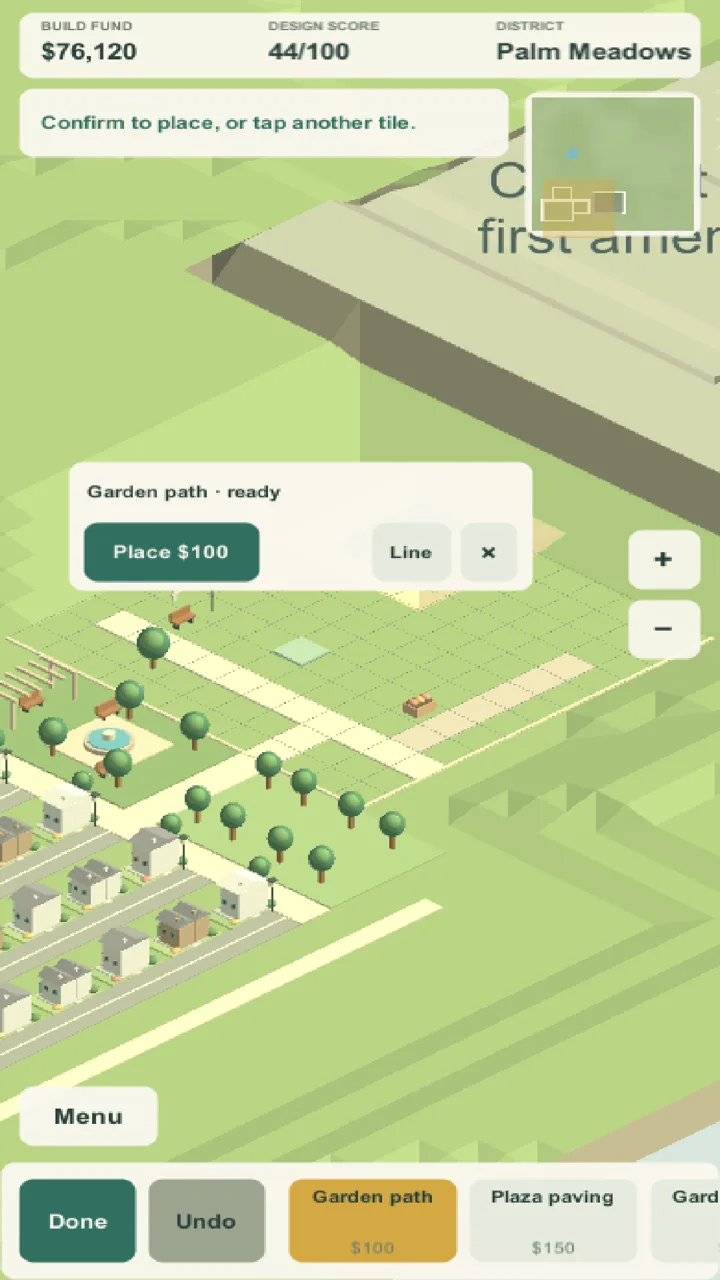
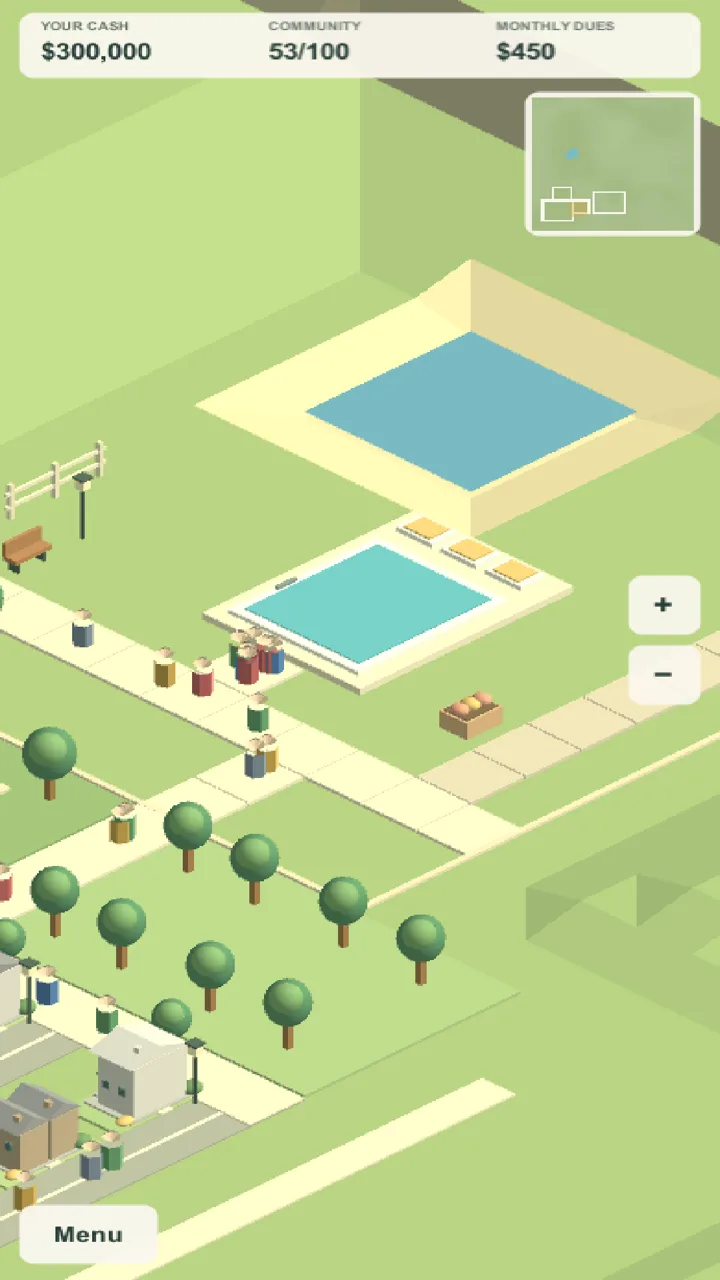
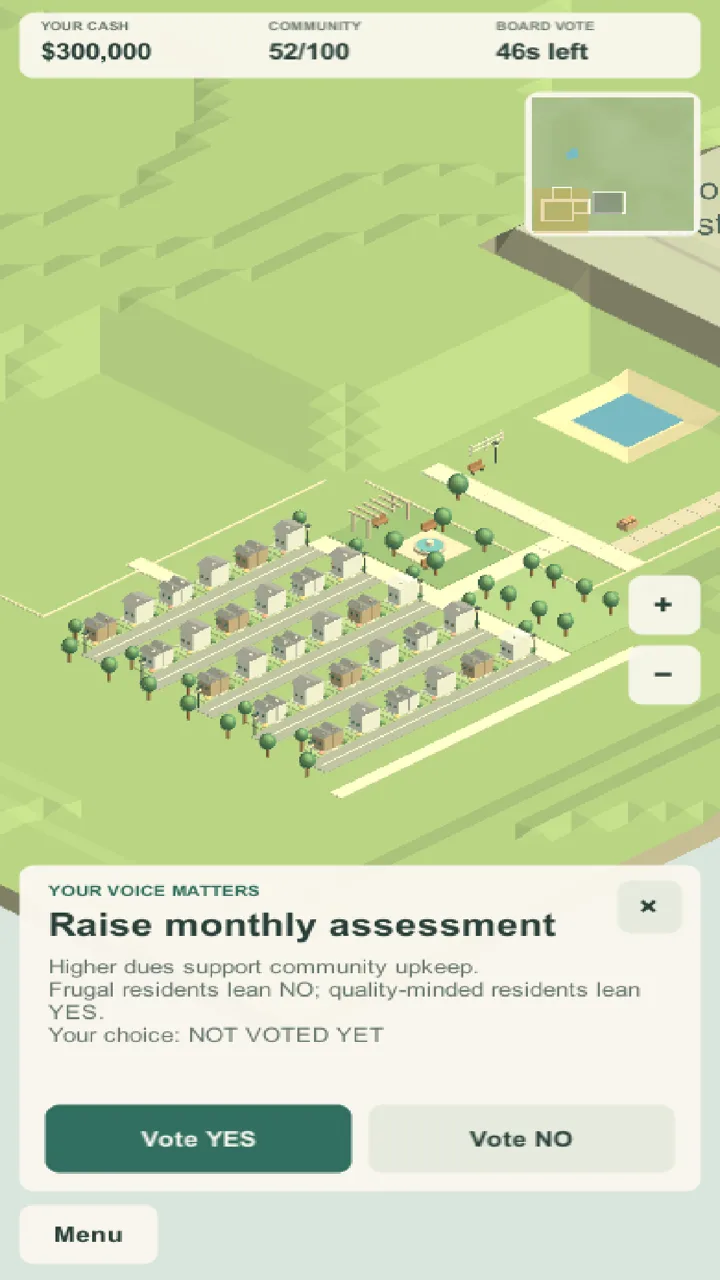
Work-in-progress captures from the Unity editor, October 2026. They have not yet been taken on a phone. Not final art; money, scores and prices shown are test values.
Development status
Common Grounds is early in development, and we’d rather tell you exactly where it is than promise a date.
One great-looking neighborhood with construction, residents, maintenance, a real economy and touch controls that people can finish without help.
Sign-in, shared state, and a first test with three people buying homes and voting in the same community, plus first builds on iPhone and Android.
A small district of three to five communities, opened to invited players. This is where early-access invitations will come from.
A store release once testers keep coming back on their own. No date until we earn one.
Leave your email and we’ll write when there’s news worth sharing, including when closed testing opens. That’s it: no spam, no sharing your address.